 Contact us


Concreting Skips
SEL supplies crane-lifted concrete skips for hire and sale nationwide. Our range features low-loading laydown skips designed for direct filling from transit mixers without ramps, with geared hand-wheel and flexible tremie hose options for clean, controlled pours into slabs, walls, and narrow columns.
Use cases
- Ground slabs, floor decks, and raft foundations
- Reinforced concrete columns and vertical piers
- Narrow wall formwork and shuttering panels
- Mass concrete trench footings and pile caps
- Restricted-access pours where pump trucks cannot reach
- Precast beam casting and civil engineering structures
Our Solutions
Unsure which skip best suits your site setup? Speak to an SEL expert for advice on crane capacities, pour rates, and delivery.
Which Concrete Skip Do I Need?
Choosing the right skip comes down to the shape of your pour and how tightly confined the space is.
| Pour Application | Recommended Skip | Why It Works |
|---|---|---|
| Slabs and floor decks | Coneflow Concrete Skips | Geared hand-wheel allows smooth, metered pouring over wide areas |
| Columns and vertical piers | Rollover / Column Skip | Flexible rubber hose guides concrete between rebar without splashing or aggregate separation |
| Narrow walls and shutters | Rollover / Column Skip | Narrow tremie chute fits easily between wall shutters and internal ties |
| Mass footings and pile caps | Coneflow Concrete Skips | Conical hopper provides high-volume discharge without surging |
Both skips lay flat on the ground so mixer trucks can fill them directly without ramps or pits. Contact our team for advice on skip capacities, crane limits, and hire rates.
Related formwork equipment
In addition to our concreting skips, we supply complete formwork, shuttering, and propping systems for reinforced concrete construction.
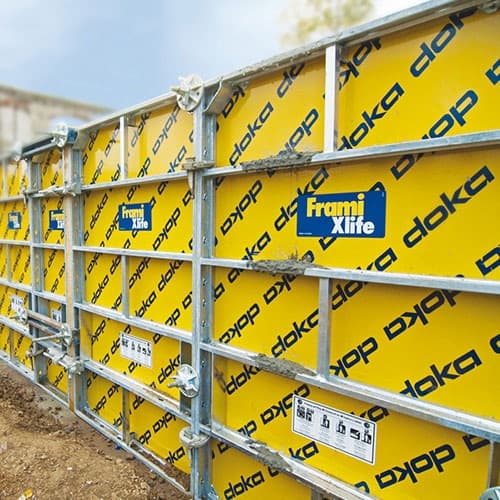
Frami Formwork Panel System
Modular lightweight steel-framed panels for rapidly shuttering reinforced concrete walls and columns.
Explore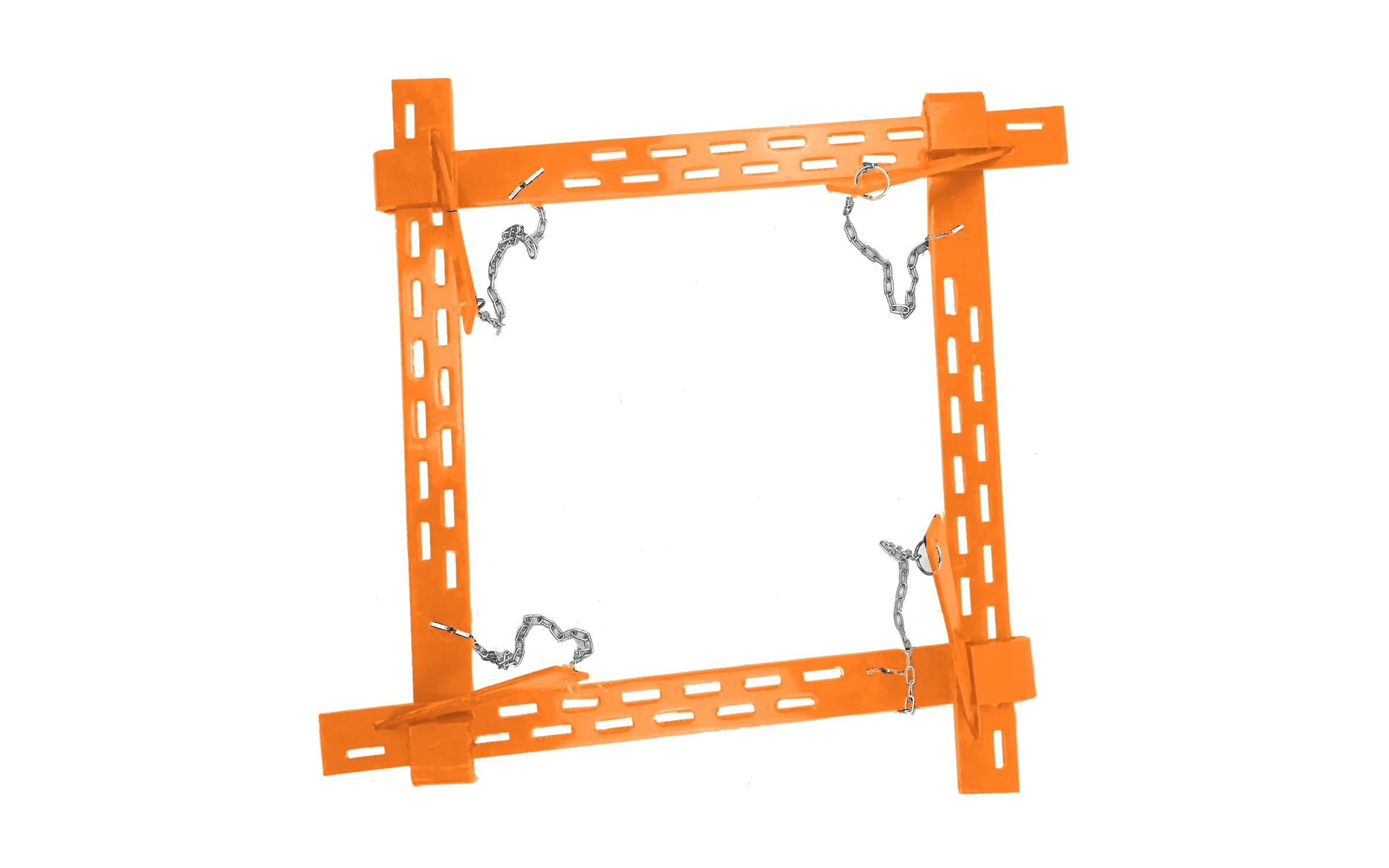
Column Clamps
Adjustable steel arms and wedges for shuttering square and rectangular timber columns.
Explore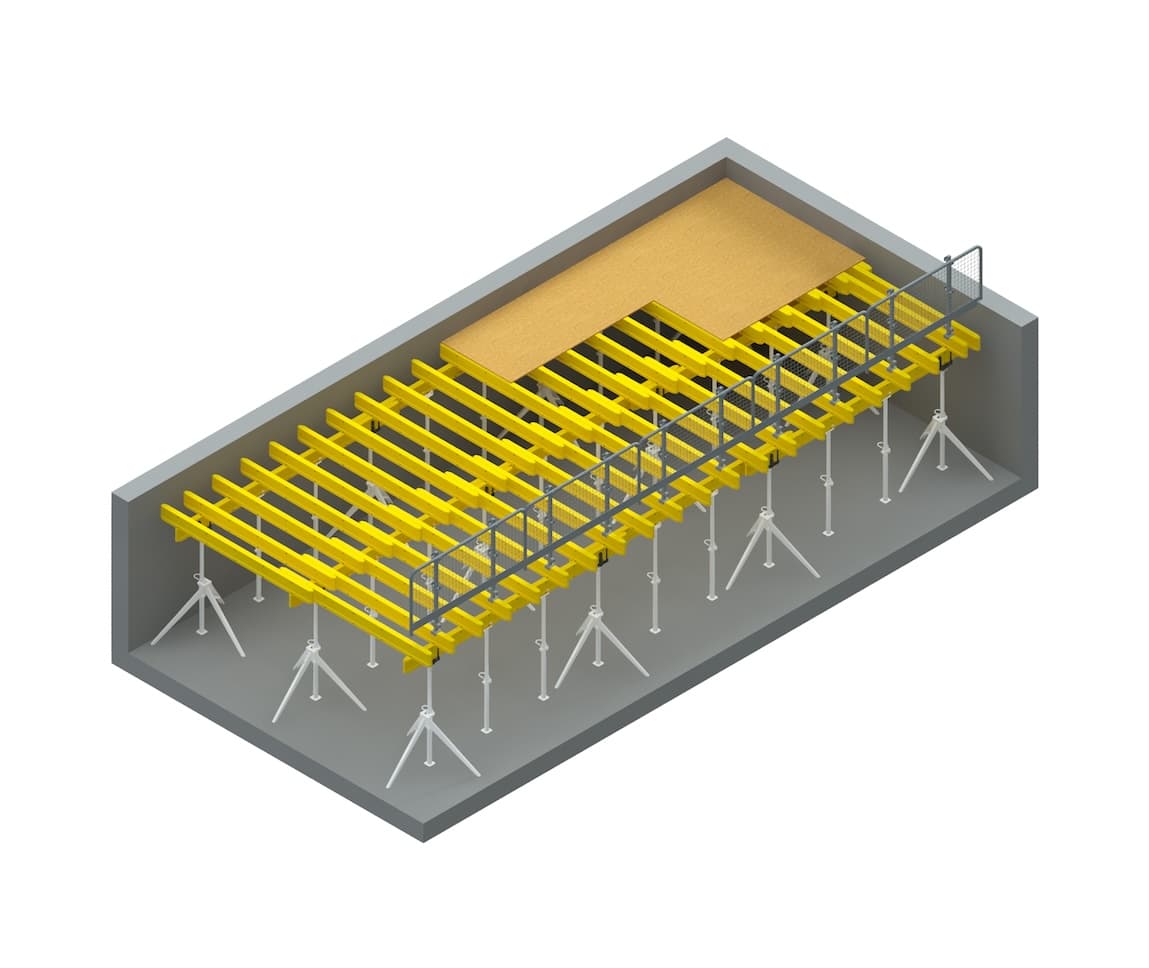
Dokaflex 124 Soffit Support System
Complete timber-beam falsework system for structural propping during elevated floor slab pours.
Explore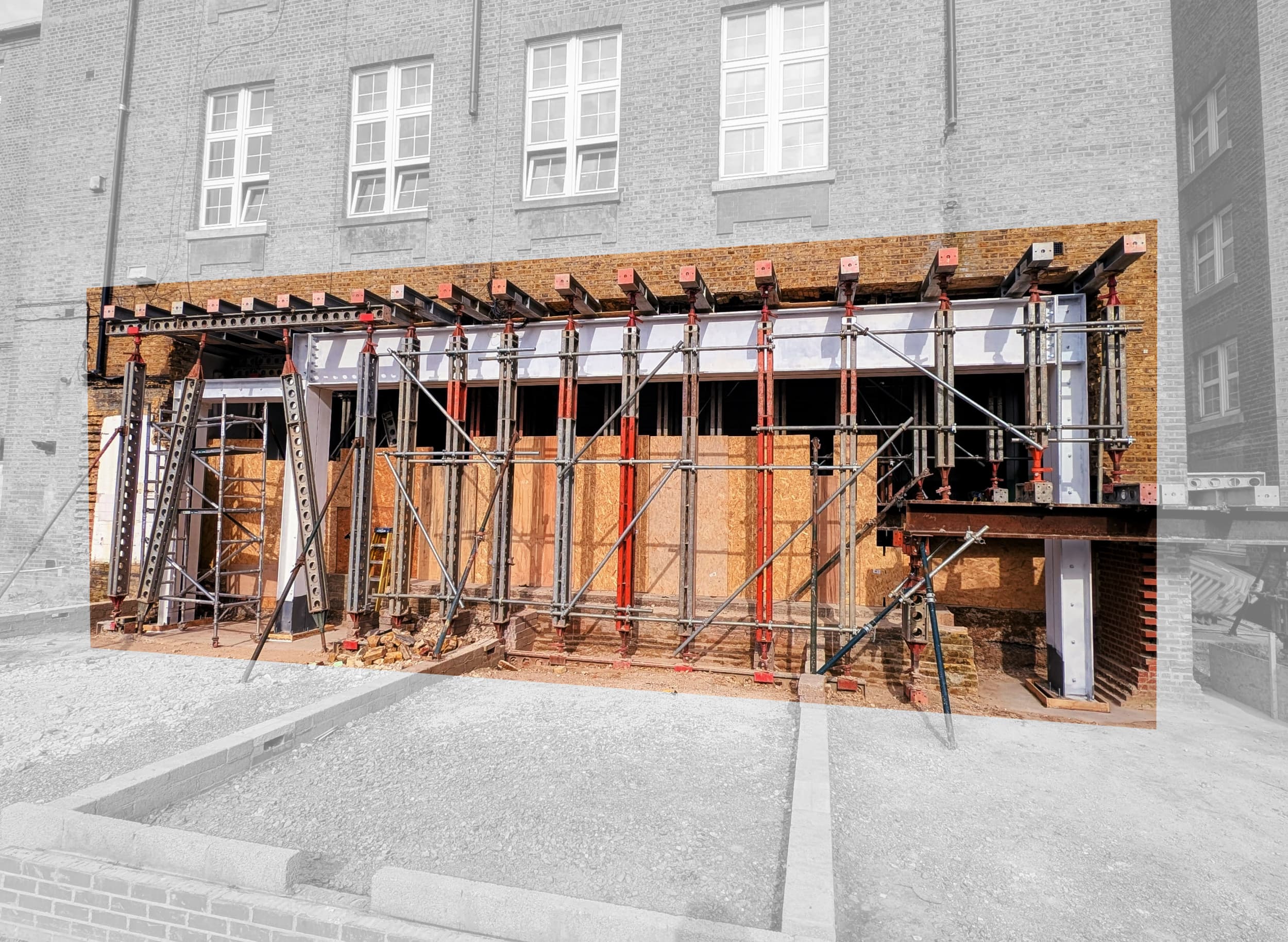
Slimshore Props and Soldiers
Heavy-duty steel soldiers acting as formwork strongbacks to resist lateral wet concrete pressures.
Explore
Common questions
What is the main difference between a coneflow skip and a rollover column skip?
Which concrete skip should be used for pouring slabs and foundations?
Which concrete skip is best suited for narrow columns and deep wall forms?
How does a laydown rollover skip differ from an upright concrete skip?
How do you choose the right concrete skip capacity for site crane operations?
What safety standards and lifting regulations apply to concrete skips in the UK?
We can help with your next project.
Our team is friendly, knowledgeable and ready to consult. We offer no-obligation site visits, fast delivery and competitive rates. Simply fill in the form and we'll be in touch.
You can also give us a call at any time.