 Contact us


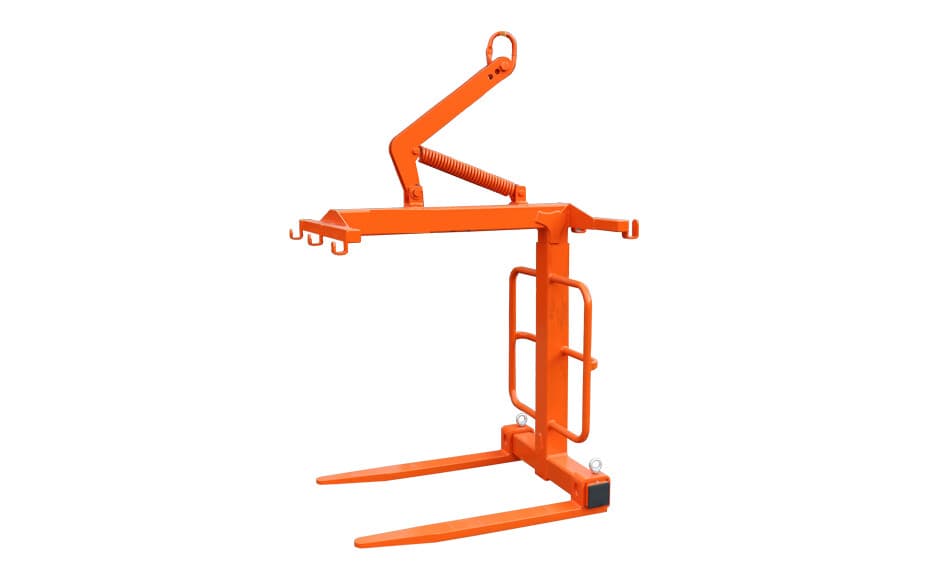
Self-Levelling Crane Forks
Automatic spring-balancing crane forks with safety restraint net for moving palletised site loads
- Safe Working Load to 2,000kg
- Automatic spring-loaded self-balancing lifting head
- Safety restraint net included as standard
- LOLER certified with valid test certification
- Fast nationwide delivery from local depots
SEL's self-levelling crane forks provide an efficient, safe method for lifting palletised materials across construction sites using tower cranes, mobile cranes, and lorry loaders. Equipped with an automatic spring-loaded lifting eye and supplied with a secondary safety restraint fall net, the forks balance automatically whether laden or unladen, keeping pallets level and secure throughout the lift.
Typical Applications
- Palletised brick and block hoisting
- Mortar tub and bagged aggregate distribution
- Scaffold deck and loading platform landing
- Roof tile and slate pack hoisting
- Upper floor slab material distribution
- Lorry offloading on congested sites
How the Automatic Balancing Mechanism Works
An internal heavy-duty tension spring connects the frame to the sliding suspension eye. When unladen, the spring holds the lifting ring toward the rear, ensuring the fork tines hang level or pitched slightly upward for smooth entry into pallet slots without manual assistance.
Once the tines engage the pallet and the crane begins hoisting, the load weight overcomes the spring resistance. The suspension point automatically glides forward along its track until positioned directly above the combined centre of gravity. This keeps the pallet horizontal throughout the lift, preventing materials from tilting forward or sliding off the forks.
Secondary Restraint and Site Safety
In compliance with BS EN 13155 standards for non-fixed lifting attachments, moving palletised materials overhead requires secondary positive retention. Every SEL self-levelling crane fork includes a certified heavy-duty fall restraint net.
After completing an initial trial lift to verify balance, site teams wrap the net beneath and around the pallet, securing it to frame retention lugs before high-level hoisting. The net ensures that damaged strapping, loose bricks, or shifting components cannot drop onto personnel working below.
Rigging and LOLER Compliance
SEL crane forks connect directly to crane hooks or suspend from certified Grade 8 drop chains and multi-leg lifting chains. They operate with tower cranes, mobile cranes, crawler cranes, and lorry loaders.
Classified as lifting accessories under LOLER 1998, every fork unit undergoes a statutory six-month thorough examination and dispatches from our depots with an up-to-date test certificate.
Self-Levelling Crane Forks: Frequently Asked Questions
What are self-levelling crane forks used for?
How does the automatic self-levelling mechanism work?
What Safe Working Load (SWL) capacities are available?
Is a safety net required when lifting pallets with crane forks?
What is the difference between self-levelling crane forks and a caged crane fork?
What machine types can self-levelling crane forks attach to?
Hire or Buy Self-Levelling Crane Forks
Site Equipment Limited supplies self-levelling crane forks for hire and sale nationwide. With depots in Bristol, Cardiff, and London, we hold stock ready for rapid dispatch. Contact your nearest SEL depot for competitive hire rates and equipment availability.
Self-Levelling Crane Forks Specifications
| Parameter | Metric |
|---|---|
| Safe Working Load (SWL) | 1,500 kg / 2,000 kg |
Related Products
Compatible lifting attachments and alternative pallet handling equipment
We can help with your next project.
Our team is friendly, knowledgeable and ready to consult. We offer no-obligation site visits, fast delivery and competitive rates. Simply fill in the form and we'll be in touch.
You can also give us a call at any time.